lunes, 27 de abril de 2015

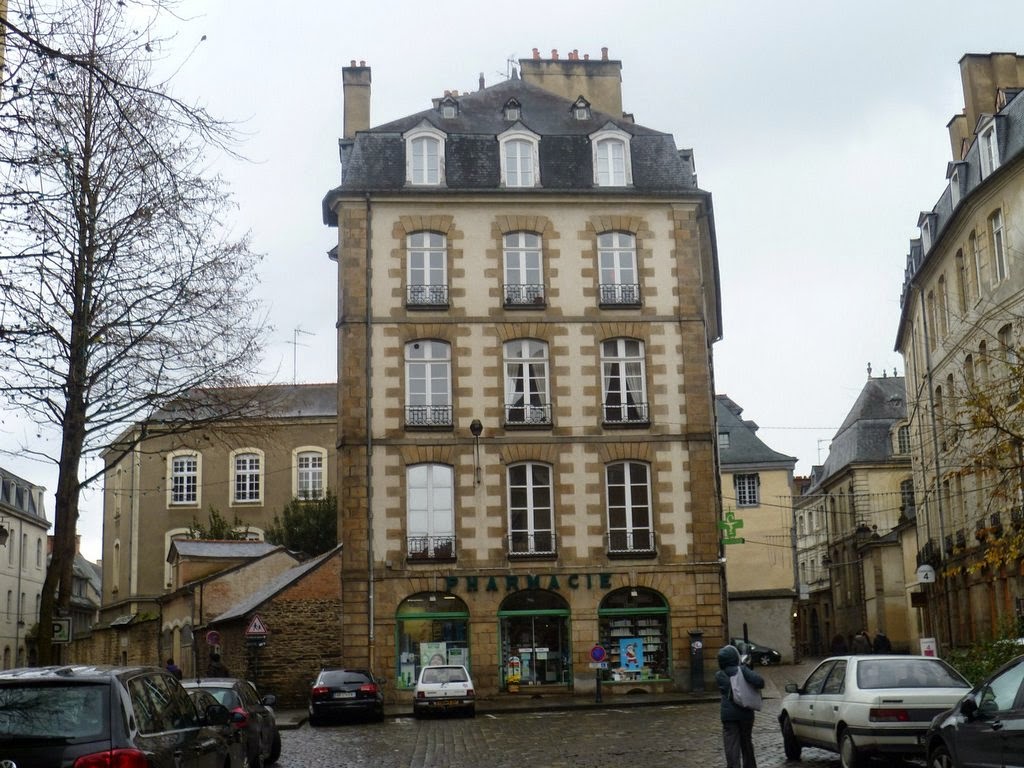
27 de Abril de 2015. Saint-Brieuc, Departamento Côtes-d'Armor, Región Bretaña, Francia. Posteando material de un viaje anterior.

Saint-Brieuc, Departamento de Côtes-d’Armor, Región de Bretaña, Francia. Se encuentra en el Canal de la Mancha, en la bahía a la que da su nombre. Se encuentra entre Rennes y Brest, a 99 km de la primera y 144 de la segunda. La línea TGV de París a Brest tiene parada en la ciudad. La villa debe su nombre al monje Brioc que en 480 se instala en los alrededores y funda un monasterio, cercano a donde se encuentra hoy día la fuente de su nombre. Saint Brieuc es uno de los siete santos fundadores de la Bretaña. En 848 el rey bretón Nominoe realiza un cónclave de obispos en su zona, tras la partida de los Normando, invasores habituales de la época. En 1220 elevan al episcopado a Guillaume Pinchon, uno de los más grandes artesanos de la construcción de la catedral. Muere en 1234 sin verla terminada y es canonizado en 1247 por el Papa Inocencio IV. La catedral se terminó en 1248. Guillaume es el primer santo de la Armórica. En 1355, la catedral sufre un incendio que se repara en dos años. En esta época la catedral servía de fortaleza para los vecinos de la población en caso de ataque. En la edad media la construcción era anárquica, no se tenían en cuenta los saneamientos y los incendios estaban a la orden del día. La ausencia de urbanismo pensado o trazado favorecía la existencia de incendios. En 1592 tuvo lugar la primera batalla de la zona dentro de las Guerras de Religión en Francia, que intentaba eliminar el protestantismo del país. En 1598 es destruida la Torre de Cesson como consecuencia de las luchas de religión. Todavía hoy quedan restos de la torre. Durante la revolución francesa la ciudad llegó a ser prefectura del Departamento Côtes-du-Nord, renombrado Côtes-d’Armor en 1990. En 1793 se extendió la guerra civil por la zona. En 1799 todavía unas revueltas locales sacaron de la cárcel a presos realistas condenados a muerte. En 1819 se acondiciona el puerto con mejores instalaciones. En 1863 llega el ferrocarril. En la Guerra de 1870, 25 soldados de la ciudad mueren en el esfuerzo contra Prusia. Durante la Primera Guerra Mundial la ciudad contribuye con 685 héroes al esfuerzo de guerra. Durante la Segunda Guerra Mundial la ciudad contribuye con 247 más.


Saint-Brieuc, Department Côtes-d'Armor, Brittany Region, France. It lies in the English Channel, in the bay to which it gives its name. It is located between Rennes and Brest, 99 km from the first and 144 km from the second. The TGV line from Paris to Brest stops in the city. The villa is named after the monk Brioc that in 480 installed around and founded a monastery, near where is now the source of its name. Saint Brieuc is one of the seven saints founders of Brittany. In 848 King Nominoe Breton takes a conclave of bishops in his area, following the departure of the Norman, common invaders of the time. In 1220 elevated to the episcopacy to Guillaume Pinchon, one of the greatest craftsmen of the construction of the cathedral. He died in 1234 without seeing it finished and he was canonized in 1247 by Pope Innocent IV. The cathedral was completed in 1248. Guillaume is the first saint of Armorica. In 1355, the cathedral suffered a fire that was repaired in two years. At this time the cathedral served as a fortress for the residents of the population in case of attack. In the Middle Ages the construction of houses was anarchic, did not take into account the writedowns and fires were at the order of the day. The absence of urbanism plan or layout favored the existence of fire. In 1592 the first battle of the area took place in the context of Wars of Religion in France, trying to eliminate the Protestantism of the country. In 1598 it was destroyed the Tower of Cesson as a result of the struggles of religion. Even today there are remains of the tower. During the French Revolution the city became prefecture of the department Côtes-du-Nord, renowned Côtes d'Armor in 1990. In 1793 the civil war spread through the area. In 1799 local revolts released out of jail pro-royalistic prisoners sentenced to death. In 1819 the port is packed with better facilities. In 1863 the railroad arrives to the city. In the War of 1870, 25 soldiers of the city died in the effort against Prussia. During World War II the city contributes with 685 heroes to the war effort. During World War II the city contributes with another 247.


sábado, 25 de abril de 2015

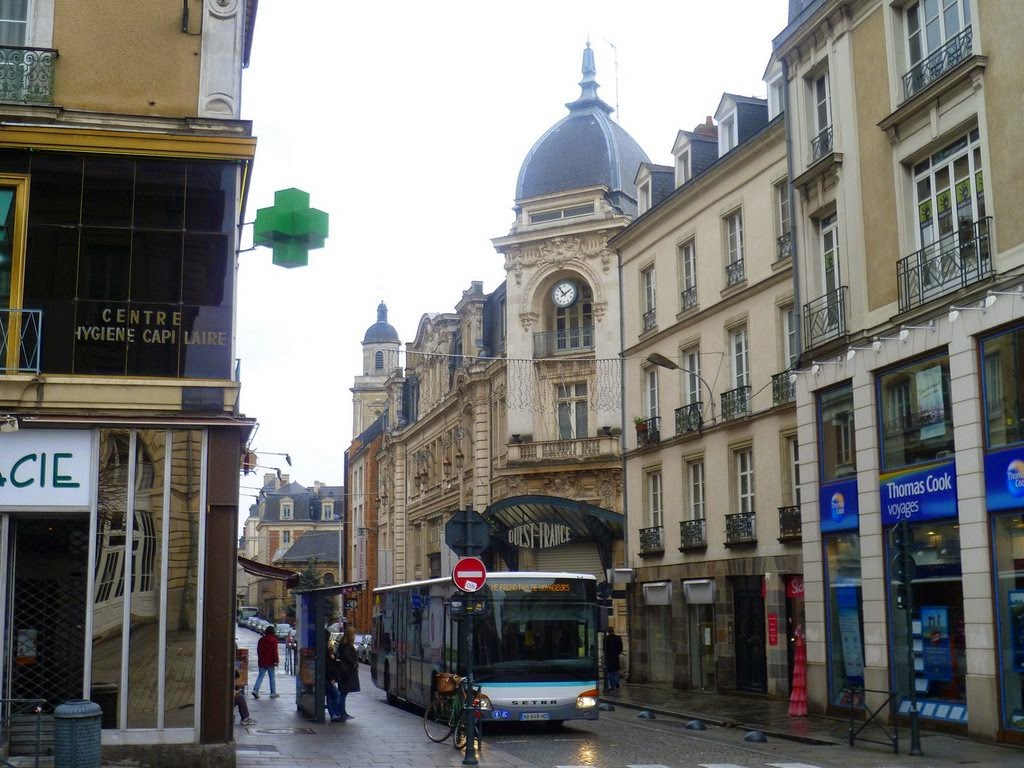
25 de Abril de 2015. Rennes, Departamento de Ille et Vilaine, Región de Bretaña, Francia. Posteando fotografías de un viaje anterior.

Rennes, Departamento Ille y Vilaine, Región de Bretaña, es una gran ciudad del oeste de Francia a 300 km de París, es la décima área metropolitana de Francia y una de las ciudades más dinámicas por su economía local y regional. Juega un papel central en el Arco Atlántico, una de las grandes regiones transnacionales reconocidas por la Comisión Europea. Rennes surge entre los siglos II y I antes de Cristo como capital de la tribu gala de los Redones. Tras la conquista romana se consolida durante el siglo I.  Hacia el siglo III Rennes disminuye su población, por lo que el recinto amurallado histórico con origen en esa época se reduce a 8 hectáreas en el centro del actual casco urbano. Estas murallas evolucionan durante el paso del mundo romano al medieval, dando continuidad a la ciudad. A lo largo de la Edad Media la ciudad se consolidad y crece, por lo que es necesario construir un nuevo recinto amurallado más grande, fuera del recinto histórico romano, para proteger los diversos barrios que han surgido y también para evitar saqueos de las Grandes Compañías (soldados mercenarios) que asolaban la región en tiempo de paz. Estas Compañías surgen en el contexto de la Guerra de los Cien Años, y eran mercenarios que cambiaban fácilmente de bando, y que asolaban las comarcas por donde pasaban cuando no tenían contrato. Tras la anexión del Ducado de Bretaña al Reino de Francia, Rennes se convierte en capital provincial y acoge el Parlamento de Bretaña. El gran incendio que sufre la ciudad en 1720 arrasa parta de la arquitectura medieval, aunque todavía quedan barrios y edificios de aquella época. Luis XV y sus arquitectos rediseñan la ciudad moderna en piedra y le dejan como patrimonio un gran número de edificios históricos. La llegada del ferrocarril en el siglo XIX y la industrialización posterior a la Segunda Guerra Mundial convierten a Rennes en una de las ciudades líderes en crecimiento, y a su región en cabeza del Arco Atlántico. Rennes es la octava ciudad universitaria de Francia con 63.000 estudiantes. Rennes cuenta con la primera tecnópolis europea donde prolifera la investigación tecnológica en telecomunicaciones. Aquí nació Minitel, que desde 1982 a 2012 ha proporcionado a Francia servicios paralelos y muy similares a internet, y que se extendió por otros países europeos y americanos. Finalmente internet ha hecho innecesario el uso de Minitel, pero los franceses dispusieron de estos servicios 15 años antes que el resto de europeos. Rennes cuenta con 90 edificios clasificados como monumentos históricos. Rennes dispone de Aeropuerto, línea de Alta Velocidad y Metro.


Rennes, Ille-et-Vilaine Department, Region of Brittany, is a major city in western France 300 km from Paris, is the tenth metropolitan area of France and one of the most dynamic cities on local and regional economy. The city plays a central role in the Atlantic Arc, one of the major transnational regions recognized by the European Commission. Rennes arises between the second and first centuries BC as the capital of the Gallic tribe of Redones. After the Roman conquest the city was consolidated during the first century. By the third century Rennes population decreases, so the historic walled area originating from that time is reduced to 8 hectares in the center of the present village. These walls evolve during the passage of the medieval Roman world, continuing the life of the city. Throughout the Middle Ages the city consolidate and grow, so it is necessary to build a new larger city walls, outside the Roman historic site, to protect the diverse neighborhoods that have arisen and to prevent looting of Great Companies (mercenaries) that ravaged the region in peacetime. These companies arising in the context of the Hundred Years' War, and were mercenaries easily changed sides, and ravaged the counties through which they passed when they had no contract. After the annexation of the Duchy of Brittany to the Kingdom of France, Rennes becomes provincial capital and home to the Parliament of Brittany. The Great Fire suffered by the city in 1720 sweeps split of medieval architecture, although there are still neighborhoods and buildings of that era. Louis XV and his architects redesigned the modern city of stone and leave numerous historic buildings. The arrival of the railway in the nineteenth century and the subsequent industrialization after WWII Rennes make one of the leading cities growing and it is head region of the Atlantic Arc. Rennes is the eighth University City in France with 63,000 students. Rennes has Europe's first techno polis where takes places rampant technological research in telecommunications. Minitel was born here, which from 1982 to 2012 provided to France parallel and very similar to internet services, and it extended by other European and American countries. Finally internet has made it unnecessary to use Minitel, but the French disposed of these services 15 years before the rest of Europe. Rennes has 90 buildings classified as historical monuments. Rennes has airport, High Speed Railway ​​and Metro.