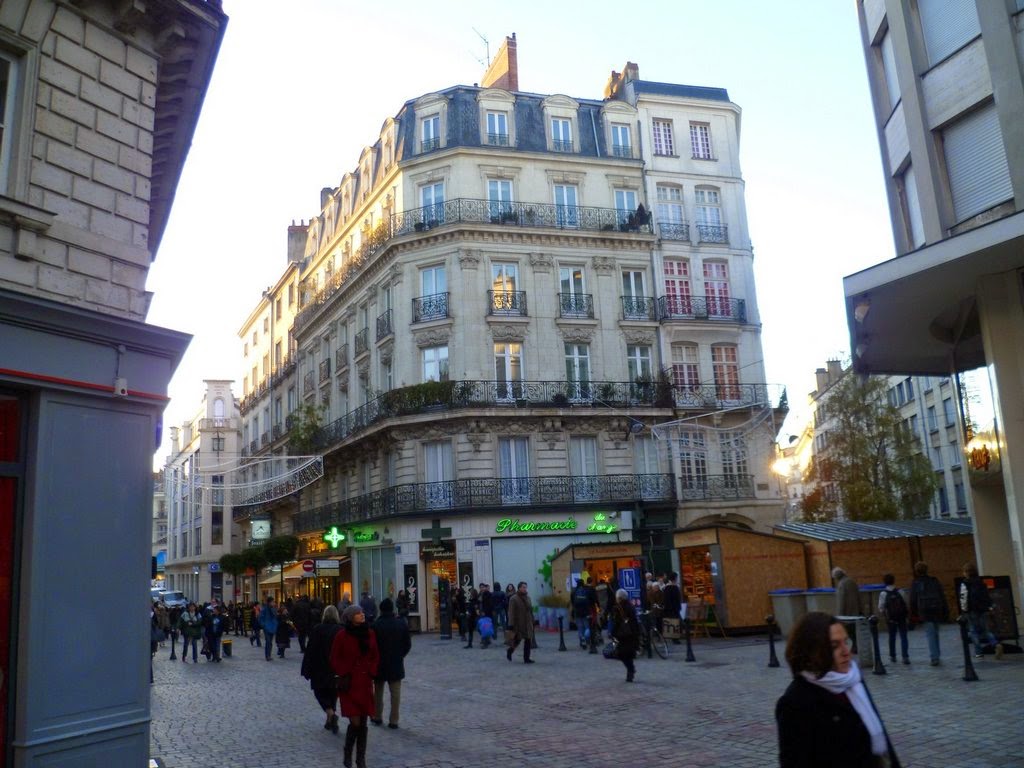
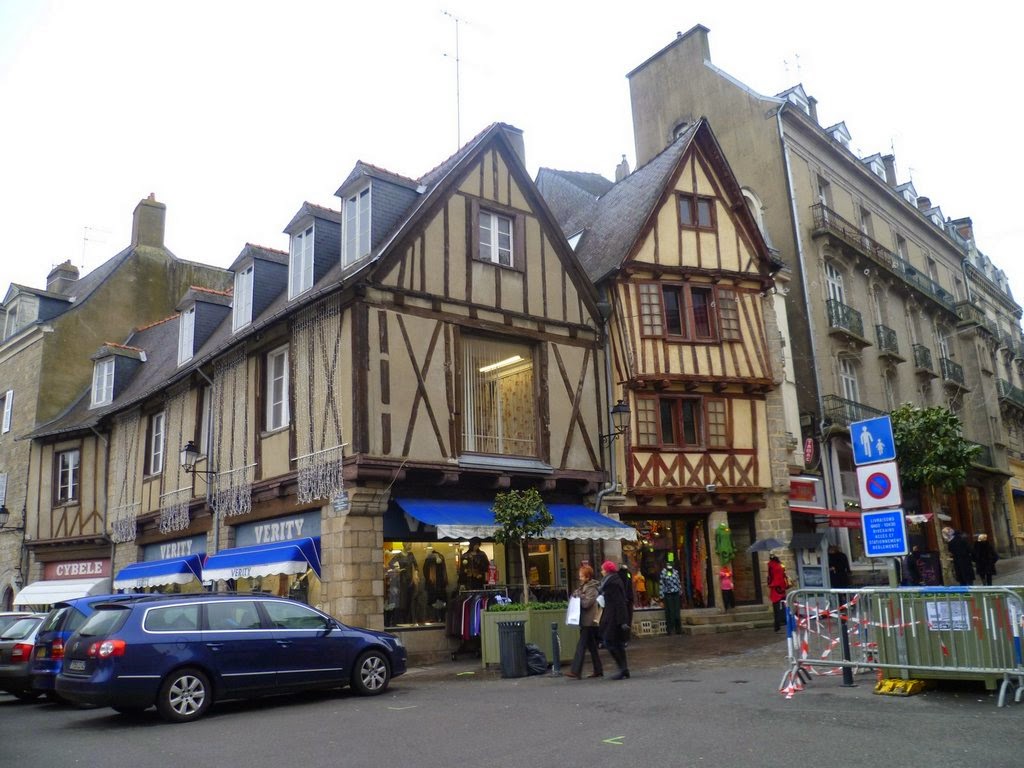
Nantes, Departamento del Loira Atlántico,
Región de Países del Loira. Situada a orillas del Loira, la zona es atravesada
por 5 ríos. Es la conurbación más importante del Oeste de Francia, con 900.000
habitantes. Durante la década de 1990, Nantes ha sido una de las ciudades
francesas de mayor crecimiento. En la época de la conquista romana la ciudad se
llamaba Condevicnum y era la capital de un pueblo llamado los Namnetes, de
donde deriva el nombre actual. Durante el siglo IV fue construida la primera
catedral. También se construyó una muralla de 1675 m que encerraba 20 ha. Los
romanos fueron expulsados en el siglo V y la ciudad formó parte del reino de
Clodoveo, luego del reino franco de Neustrie y después del Imperio Carolingio. En
778 el prefecto de la zona era Roldán, el jefe militar carolingio que después
pereció en Roncesvalles. En el siglo IX la ciudad sufre ataques de los
Normandos (vikingos). Durante el siglo X el duque bretón Alain Barbetorte
libera a la ciudad de los vikingos y hace de Nantes su capital. Pero tras su
muerte la ciudad pasa a pertenecer a los condes de Rennes. A partir del siglo
XI la ciudad pasa a depender del ducado de Bretaña. Por esta época se
construyen los puentes que conectan las 5 islas de la ciudad y ello facilita el
desarrollo comercial. Durante el siglo XIV la ciudad participa en la Guerra de
los Cien años, pasando primera a manos inglesas y luego francesas. Durante el
siglo XV la ciudad se adscribe al reino de Francia por matrimonio de los reyes
con duquesas de Bretaña. A partir del siglo XVI Nantes es un dominio real que
conserva la Cámara de Cuentas de la Provincia, pero la capitalidad de Bretaña
recayó en Rennes. Durante el siglo XVI Nantes se ve afectada por las Guerras de
Religión entre católicos y protestantes, hasta que finalmente Enrique IV
promulga el Edicto de Nantes, que si bien fue revocado el siglo siguiente por
Luis XIV, de alguna forma supuso un paso muy importante en la separación entre
la Iglesia y el Estado. Durante el siglo XVIII la ciudad duplica su población
pasando de 40.000 a 80.000 habitantes, y se convierte en un importante centro
comercial. Durante la revolución, los restos de ejércitos realistas atacaron
Nantes, pero finalmente fueron derrotados. Durante el siglo XIX, la industria
conservera, de alimentación y metalúrgica tuvo importancia en la ciudad. Nantes
acogió en 1939 algunos refugiados españoles de la Guerra Civil, unos 1200, que
estuvieron mejor atendidos que los que estuvieron en el Sur. Durante la Guerra
Mundial Nantes estuvo ocupada por los alemanes desde 1940 hasta 1944, y por un
atentado que sufrió el teniente coronel Hotz fueron fusilados 48 prisioneros
franceses el 22 de Octubre de 1941. La ciudad fue bombardeada por los aliados
en 1943. En años posteriores, la industria aeroespacial se ha incorporado a las
actividades de la ciudad, y participa en los programas del Airbus.
Nantes, Loire-Atlantique department, Pays de la
Loire. Located on the banks of the Loire, the area is crossed by five rivers.
It is the biggest conurbation in western France, with 900,000 inhabitants.
During the 1990s, Nantes has been one of France's fastest growing cities. At
the time of the Roman conquest the city was called Condevicnum and was the
capital of a people called the Namnetes, from which derives the current name.
During the fourth century it was built the first cathedral. A wall of 1675 m was
built which contained 20 has. The Romans were expelled in the V century and the
city was part of the kingdom of Clovis, and after to the Frankish kingdom of
Neustria and then the Carolingian Empire. In 778 the prefect of the area was
Roland, the Carolingian military chief who later died in Roncesvalles. In the
ninth century the city suffers attacks of the Normans (Vikings). During the
tenth century Duke Alain Breton Barbetorte frees the city of Nantes of the Vikings
and makes his capital. But after his death the city happens to belong to the
counts of Rennes. From the eleventh century the city becomes dependent on the
Duchy of Brittany. By this time the bridges connecting the 5 islands of the
city were built and this facilitates the commercial development. During the fourteenth
century the city is involved in the Hundred Years' War, going first to English
and then French hands. During the fifteenth century the city is attached to the
kingdom of France by marriage of the kings of France with Duchesses of
Brittany. From the sixteenth century Nantes is a real domain which retains the
Chamber of Accounts of the Province, but the capital of Britain went to Rennes.
During the sixteenth century Nantes is affected by the Wars of Religion between
Catholics and Protestants, and finally Henry IV enacted the Edict of Nantes in
1598, which although was revoked the following century by Louis XIV, somehow
marked a very important step in the separation of church and state. During the
eighteenth century, the city doubled its population rising from 40,000 to 80,000
inhabitants, and became an important commercial center. During the Revolution,
the remnants of realistic armies attacked Nantes, but were finally defeated.
During the nineteenth century, canning, food and metallurgical industry was
important in the city. Nantes hosted in 1939 some Spanish refugees from the
Civil War, about 1200, and they were better served than those in the South.
During World War II Nantes was occupied by the Germans from 1940 to 1944, and
because of an attack suffered by Lt. Col. Hotz were shot 48 French prisoners on
October 22, 1941. The city was bombed by the Allies in 1943. In later years the
aerospace industry has joined the activities of the city, and it is involved in
Airbus programs.