jueves, 30 de abril de 2015

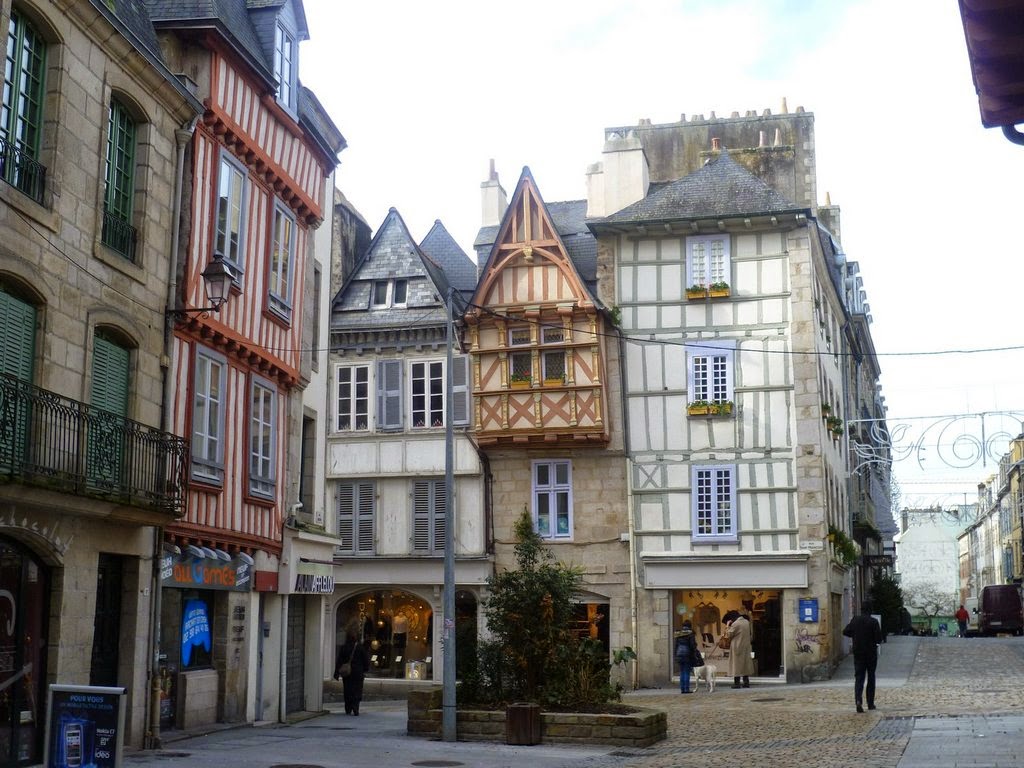
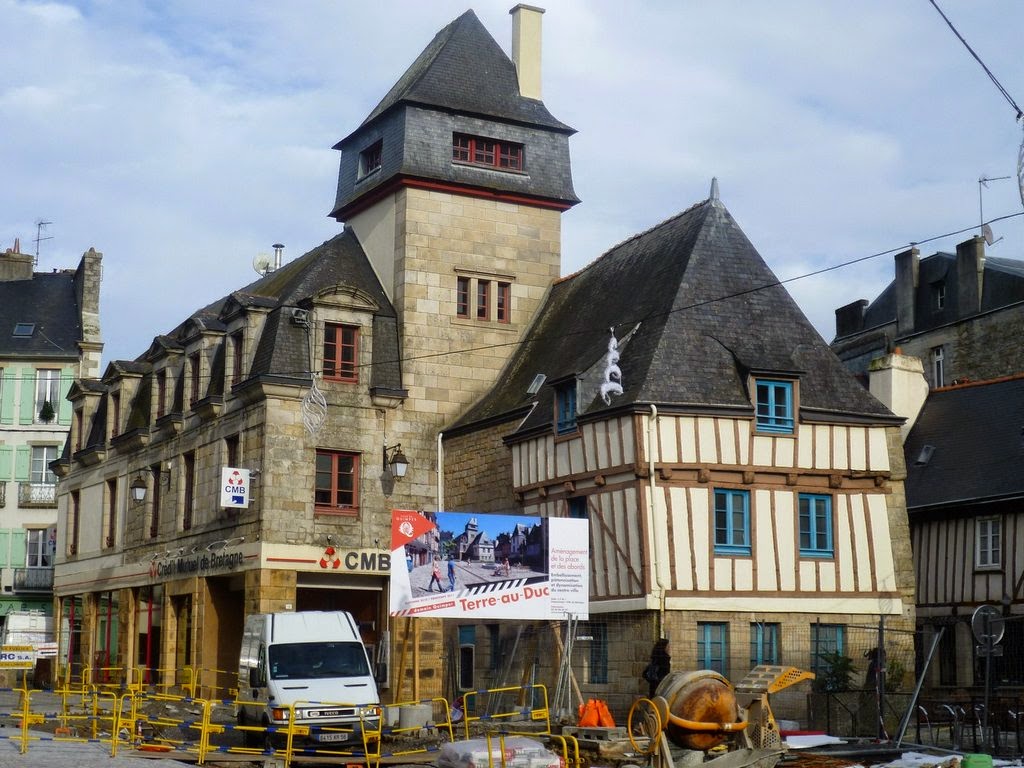
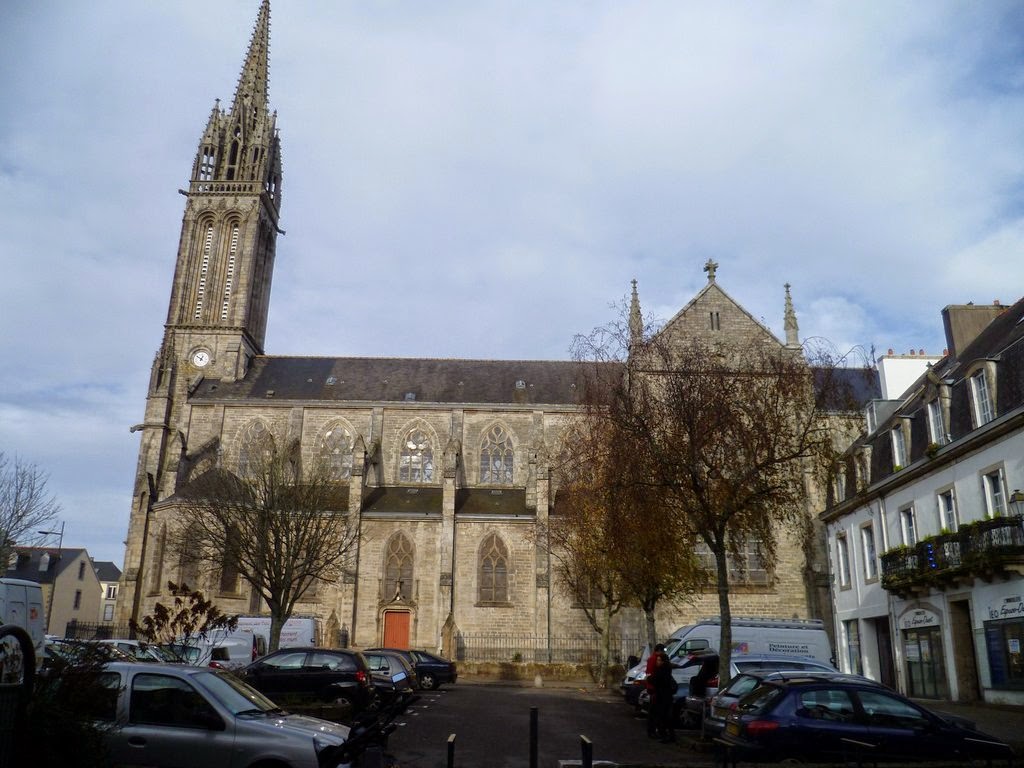
30 de Abril de 2015. Quimper, Departamento de Finisterre, Región de Bretaña, Francia. Posteando fotografías de un viaje anterior.

Quimper, prefectura del Departamento de Finisterre en la Región de Bretaña. No se tiene noticia de su fundación hasta la Alta Edad Media, atribuida a San Corentino de Quimper, que construye una catedral y a su alrededor se organiza la población. Es probable que el obispado sea de fecha posterior, ya en época carolingia, y que la planificación urbanística en torno a la catedral sea posterior al siglo X. La ciudad estará dominada por el poder de su obispo, pero también por el poder del Duque de Bretaña. A partir del siglo XIII se empieza a construir la nueva catedral, una de las más bellas de Bretaña. A finales de la Edad Media, Quimper era una ciudad importante, con 4.500 habitantes. Con la unión de Bretaña a Francia la ciudad sigue creciendo, y con la Revolución Francesa la ciudad se convierte en capital del nuevo Departamento de Finisterre. En el siglo XIX continúa el desarrollo con la Revolución Industrial y el tren llega a Quimper en 1864. Esta ciudad goza de una extraordinaria arquitectura medieval y muchas casas de la época se conservan con su estilo de vigas frontales paralelas y diagonales. Lo cierto es que muchas ciudades de Francia de esta parte del país parecen verdaderas casas de muñecas. Estas ciudades son, simplemente, preciosas.


Quimper, prefecture of the department of Finistere in Brittany Region. There are no news of its foundation until the High Middle Ages, attributed to St. Corentin of Quimper, who builded a cathedral and the population organized itself around. It is likely that the bishopric is dated back as early as Carolingian period, and urban planning around the cathedral comes after the tenth century. The city will be dominated by the power of his bishop, but also by the power of the Duke of Britain. From the thirteenth century they begin to build the new cathedral, one of the most beautiful in Britain. In the late Middle Ages, Quimper was an important city, with 4,500 inhabitants. With the union of Brittany to France the city continues to grow, and with the French Revolution, the city became the capital of the new Department of Finisterre. In the nineteenth century it continues to develop with the Industrial Revolution and the train arrives in Quimper in 1864. This city enjoys an extraordinary medieval architecture and many houses of that time are preserved with their style of parallel and diagonal beams front. The truth is that many cities in France, of this part of the country, seem real dollhouse. These cities are simply beautiful.


miércoles, 29 de abril de 2015

29 de Abril de 2015. Brest, Departamento de Finisterre, Región de Bretaña, Francia. Posteando material de un viaje anterior.

Brest, Departamento de Finisterre, Región de Bretaña. Ya había sido fortaleza en el Imperio Romano, y a partir del siglo IX cabe destacar su castillo, el cual pasa a pertenecer a los Duques de Bretaña en el siglo XIII. Eduardo III de Inglaterra toma la ciudad en el siglo XIV y después es cedida a Juan IV de Bretaña. La ciudad recibe en el siglo XVI el título de villa, pero no toma importancia hasta el siglo XVII cuando Richelieu estableció allí un puerto militar, transformado por Luis XIV en gran puerto de la Marina Real. El puerto conoció un gran tráfico durante el siglo XVIII. Tuvo su apogeo durante la Revolución Industrial y se convirtió en el principal puerto comercial de la región. Durante la Segunda Guerra Mundial la ciudad fue destruida, sus monumentos fueron destruidos, sus instalaciones militares bombardeadas, la Marina de Guerra fue transferida al Mediterráneo; la ciudad se convirtió en base de submarinos de la Marina Alemana. Hoy en día Brest es una de las ciudades más importantes de Bretaña, y sus instalaciones portuarias están preparadas para recibir naves de cualquier tamaño y ser reparadas en sus astilleros. Alberga la Sede del Centro Nacional de Explotación de los Océanos y del Centro Oceanográfico de Bretaña. Finalmente, las bases submarinas alemanas han sido recuperadas para instalar la Base Francesa de Submarinos Nucleares, uno de los lugares más seguros y misteriosos del mundo.


Brest, Department of Finistere region of Brittany. It had been a camp in the Roman Empire, and from the ninth century include its castle, which happens to belong to the Dukes of Brittany in the XIII century. Edward III of England took the city in the fourteenth century and it is then transferred to Juan IV of Britain. The city receives in the sixteenth century the town title, but does not take importance to the seventeenth century when Richelieu established a military port, transformed by Louis XIV in great port of the Royal Navy. The port experienced a large traffic during the eighteenth century. It had its heyday during the Industrial Revolution and became the main commercial port of the region. During World War II the city was destroyed, monuments were destroyed, military installations bombed, the Navy was transferred to the Mediterranean; the city became submarine base of the German Navy. Today Brest is one of the most important cities in Britain, and its port facilities are ready to receive ships of any size and be repaired in its shipyards. It houses the headquarters of the National Center for Exploitation of the Oceans and Oceanography Centre of Britain. Finally, the German submarine bases have been recovered to install the French Nuclear Submarine Base, one of the safest and secret places in the world.


lunes, 27 de abril de 2015

27 de Abril de 2015. Saint-Brieuc, Departamento Côtes-d'Armor, Región Bretaña, Francia. Posteando material de un viaje anterior.

Saint-Brieuc, Departamento de Côtes-d’Armor, Región de Bretaña, Francia. Se encuentra en el Canal de la Mancha, en la bahía a la que da su nombre. Se encuentra entre Rennes y Brest, a 99 km de la primera y 144 de la segunda. La línea TGV de París a Brest tiene parada en la ciudad. La villa debe su nombre al monje Brioc que en 480 se instala en los alrededores y funda un monasterio, cercano a donde se encuentra hoy día la fuente de su nombre. Saint Brieuc es uno de los siete santos fundadores de la Bretaña. En 848 el rey bretón Nominoe realiza un cónclave de obispos en su zona, tras la partida de los Normando, invasores habituales de la época. En 1220 elevan al episcopado a Guillaume Pinchon, uno de los más grandes artesanos de la construcción de la catedral. Muere en 1234 sin verla terminada y es canonizado en 1247 por el Papa Inocencio IV. La catedral se terminó en 1248. Guillaume es el primer santo de la Armórica. En 1355, la catedral sufre un incendio que se repara en dos años. En esta época la catedral servía de fortaleza para los vecinos de la población en caso de ataque. En la edad media la construcción era anárquica, no se tenían en cuenta los saneamientos y los incendios estaban a la orden del día. La ausencia de urbanismo pensado o trazado favorecía la existencia de incendios. En 1592 tuvo lugar la primera batalla de la zona dentro de las Guerras de Religión en Francia, que intentaba eliminar el protestantismo del país. En 1598 es destruida la Torre de Cesson como consecuencia de las luchas de religión. Todavía hoy quedan restos de la torre. Durante la revolución francesa la ciudad llegó a ser prefectura del Departamento Côtes-du-Nord, renombrado Côtes-d’Armor en 1990. En 1793 se extendió la guerra civil por la zona. En 1799 todavía unas revueltas locales sacaron de la cárcel a presos realistas condenados a muerte. En 1819 se acondiciona el puerto con mejores instalaciones. En 1863 llega el ferrocarril. En la Guerra de 1870, 25 soldados de la ciudad mueren en el esfuerzo contra Prusia. Durante la Primera Guerra Mundial la ciudad contribuye con 685 héroes al esfuerzo de guerra. Durante la Segunda Guerra Mundial la ciudad contribuye con 247 más.


Saint-Brieuc, Department Côtes-d'Armor, Brittany Region, France. It lies in the English Channel, in the bay to which it gives its name. It is located between Rennes and Brest, 99 km from the first and 144 km from the second. The TGV line from Paris to Brest stops in the city. The villa is named after the monk Brioc that in 480 installed around and founded a monastery, near where is now the source of its name. Saint Brieuc is one of the seven saints founders of Brittany. In 848 King Nominoe Breton takes a conclave of bishops in his area, following the departure of the Norman, common invaders of the time. In 1220 elevated to the episcopacy to Guillaume Pinchon, one of the greatest craftsmen of the construction of the cathedral. He died in 1234 without seeing it finished and he was canonized in 1247 by Pope Innocent IV. The cathedral was completed in 1248. Guillaume is the first saint of Armorica. In 1355, the cathedral suffered a fire that was repaired in two years. At this time the cathedral served as a fortress for the residents of the population in case of attack. In the Middle Ages the construction of houses was anarchic, did not take into account the writedowns and fires were at the order of the day. The absence of urbanism plan or layout favored the existence of fire. In 1592 the first battle of the area took place in the context of Wars of Religion in France, trying to eliminate the Protestantism of the country. In 1598 it was destroyed the Tower of Cesson as a result of the struggles of religion. Even today there are remains of the tower. During the French Revolution the city became prefecture of the department Côtes-du-Nord, renowned Côtes d'Armor in 1990. In 1793 the civil war spread through the area. In 1799 local revolts released out of jail pro-royalistic prisoners sentenced to death. In 1819 the port is packed with better facilities. In 1863 the railroad arrives to the city. In the War of 1870, 25 soldiers of the city died in the effort against Prussia. During World War II the city contributes with 685 heroes to the war effort. During World War II the city contributes with another 247.